
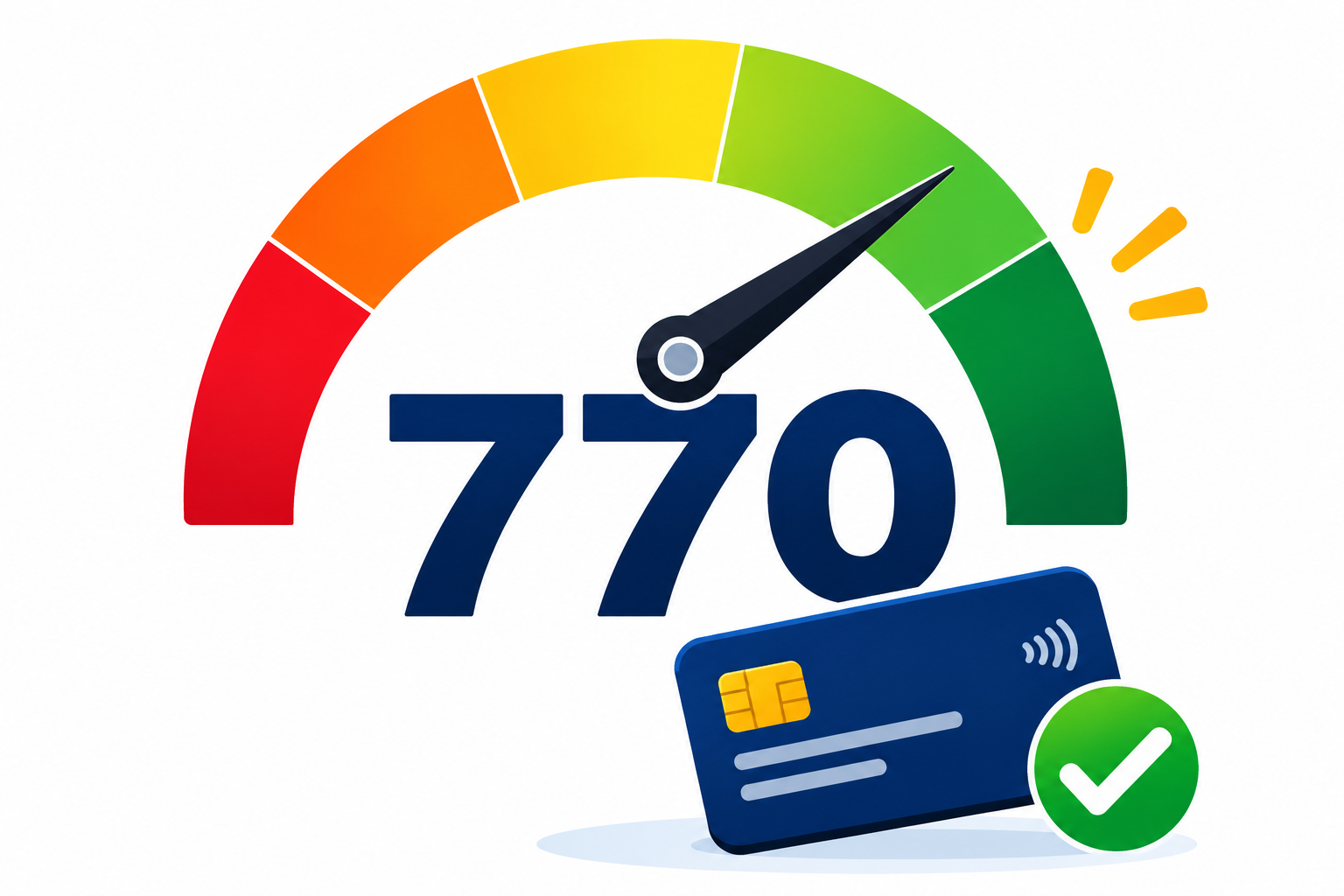
A credit score is one of the most important factors influencing financial opportunities in the United States. Whether someone wants to apply for a credit card, purchase a vehicle, qualify for a mortgage, or obtain a personal loan, lenders often use credit scores to evaluate borrowing risk. A strong score can make it easier to qualify for competitive interest rates, better loan terms, and premium financial products. Understanding where a score stands can help consumers make informed decisions and protect their financial progress.
A 770 credit score is considered very good under the standard FICO scoring system. It falls within the 740 to 799 range, indicating a strong history of credit management and a generally lower risk to lenders. People with this score may qualify for many credit cards and loans with competitive terms. Although it is not yet in FICO’s exceptional category, it is already a strong position for most borrowing needs.
However, a high credit score does not guarantee approval or the lowest possible interest rate. Lenders also consider income, employment, existing debt, payment history, and the specific scoring model used. Understanding how a 770 score works can help borrowers take advantage of their current credit standing while protecting it over time.
Is a 770 Credit Score Good?
Yes, a 770 FICO credit score is very good. It is significantly above the fair and good credit categories and places a borrower in a favorable position compared with many consumers.
FICO scores generally range from 300 to 850. The commonly used categories are:
| FICO Score Range | Credit Rating |
| 300–579 | Poor |
| 580–669 | Fair |
| 670–739 | Good |
| 740–799 | Very Good |
| 800–850 | Exceptional |
A score of 770 is comfortably within the very good category. It suggests that the borrower has demonstrated responsible credit behavior, such as making payments on time and managing outstanding balances.
A 770 score is also above the average U.S. FICO score. Experian reported an average FICO score of 714 in 2025, making 770 a stronger-than-average result.
It is important to distinguish FICO from VantageScore. Under VantageScore 3.0 and 4.0, a score of 770 is classified as good rather than excellent. Therefore, the rating displayed by a credit monitoring service may depend on which scoring model it uses.
What Does a 770 Credit Score Mean to Lenders?
Lenders use credit scores to estimate how likely someone is to repay borrowed money. A higher score generally indicates lower credit risk, although it is only one part of the lending decision.
With a 770 score, borrowers generally have a strong credit profile and may have access to a wide selection of financial products.
Better Approval Opportunities
A 770 score can improve the chances of qualifying for many credit cards, auto loans, mortgages, and personal loans. Lenders may consider applicants in this range more favorably than those with fair or poor credit.
However, approval still depends on other factors. A borrower with substantial existing debt or insufficient income may not qualify even with a high credit score.
Competitive Interest Rates
Interest rates can vary according to credit risk. Borrowers with very good credit may receive more competitive rates than applicants with lower scores.
This can make a meaningful difference when financing a home or vehicle. A lower interest rate can reduce monthly payments and the total interest paid over the life of a loan.
Access to Premium Credit Cards
Many credit card issuers offer products designed for consumers with strong credit histories. These may include travel rewards, cash-back benefits, purchase protection, and other features.
A 770 score may put applicants in a favorable position for these products, but card issuers also consider income, existing accounts, and their own eligibility requirements.
More Negotiating Flexibility
A strong credit profile may give borrowers more options when comparing lenders. Rather than accepting the first offer, consumers can compare interest rates, fees, repayment periods, and other terms.
Can You Get a Credit Card With a 770 Credit Score?
Yes. A 770 credit score generally puts someone in a strong position when applying for credit cards. Many issuers offer products to applicants with very good credit, including cards with rewards and additional benefits.
However, the best card depends on spending habits, financial goals, annual fees, and eligibility requirements.
Cash-Back Credit Cards
Cash-back cards return a percentage of eligible purchases as rewards. Some provide a flat rate on most purchases, while others offer higher rewards in selected categories such as groceries, gas, or dining.
Consumers with a 770 score may qualify for several cash-back products, depending on the issuer’s requirements.
Travel Rewards Credit Cards
Travel cards may offer points or miles that can be redeemed for flights, hotels, and other travel expenses. Premium options sometimes include airport lounge access, travel insurance, and other benefits.
Before applying, compare annual fees, reward restrictions, redemption values, and foreign transaction charges.
Low-Interest Credit Cards
Some credit cards offer relatively competitive ongoing APRs or introductory promotional rates. These products may be useful for people who occasionally carry balances, although paying the full statement balance each month is generally a better way to avoid interest charges.
Balance Transfer Cards
A balance transfer card may offer an introductory period with a reduced or zero interest rate on qualifying transferred balances. Applicants should review transfer fees, promotional periods, and the regular APR that applies afterward.
A strong score may help with eligibility, but approval and credit limits are never guaranteed.
Can You Buy a Car With a 770 Credit Score?
Yes. A 770 credit score can put a borrower in a favorable position when applying for an auto loan. It falls within the very good FICO category and is also within the prime range under VantageScore classifications.
Auto lenders use credit information to evaluate repayment risk and determine loan terms. A borrower with a 770 score may have access to competitive financing offers, although the exact rate depends on the lender and other financial details.
Auto Loan Interest Rates
A higher credit score can help borrowers qualify for lower interest rates. However, lenders may use industry-specific FICO Auto Scores rather than the general score displayed by a credit monitoring service.
The vehicle’s age, loan amount, down payment, loan duration, and the applicant’s income can also affect the offer.
New and Used Vehicle Financing
A 770 score may help with financing both new and used vehicles. However, lenders sometimes apply different rates and requirements depending on vehicle age and condition.
Before signing an agreement, compare the annual percentage rate, total interest, loan term, and complete repayment amount.
How to Get a Better Auto Loan Offer
Even with very good credit, borrowers should compare multiple financing options. Consider getting prequalified through a bank or credit union before visiting a dealership.
A larger down payment may also reduce the amount borrowed and help lower monthly payments. Avoid choosing a longer loan term simply to make the monthly payment appear smaller, because it may increase the total interest paid.
Can You Buy a House With a 770 Credit Score?
A 770 credit score is generally a strong starting point for a mortgage application. It may help borrowers qualify for competitive mortgage rates and a wider range of loan products.
Mortgage lenders typically evaluate credit history alongside income, employment, existing debt, savings, down payment, and property information.
Conventional Mortgages
A 770 score may help applicants qualify for conventional mortgage financing with competitive terms. Depending on the loan program and other requirements, borrowers may also benefit from favorable mortgage pricing.
The exact interest rate and eligibility conditions vary between lenders.
FHA Loans
FHA loans are designed to make home financing accessible to eligible borrowers with different credit profiles. FHA guidelines generally allow a minimum FICO score of 580 for the 3.5% down payment option, while borrowers with scores from 500 to 579 generally need at least 10% down.
A 770 score is comfortably above these baseline requirements. However, lenders may have additional requirements involving income, debt, property eligibility, and down payment.
VA Loans
Eligible military service members, veterans, and certain surviving spouses may qualify for VA-backed home loans. The Department of Veterans Affairs does not establish a universal minimum credit score for VA loans, although individual lenders may set their own requirements.
A 770 score can strengthen a mortgage application, but eligibility for the VA program and the lender’s underwriting standards still apply.
Preparing for a Mortgage Application
Before applying, review all three credit reports, avoid unnecessary new credit applications, and keep existing balances manageable.
It is also important to calculate your debt-to-income ratio and maintain enough savings for closing costs, moving expenses, and other homeownership responsibilities.
What Factors Affect a 770 Credit Score?
A strong credit score is usually the result of consistent financial habits. However, even borrowers with very good credit should understand the factors that influence their scores.
Payment History
Payment history is the most important factor in many FICO scoring models, accounting for approximately 35% of a typical FICO score.
It reflects whether borrowers make required payments on time. Missed payments, serious delinquencies, collections, and charge-offs can negatively affect credit scores.
Maintaining a consistent record of on-time payments is essential for protecting a 770 score.
Credit Utilization
Credit utilization measures how much revolving credit a person uses compared with available credit limits.
For example, if someone has a total credit limit of $10,000 and carries a balance of $2,000, their utilization rate is 20%.
High utilization can lower a credit score, even when payments are made on time. Keeping balances low relative to available limits can help maintain a stronger profile.
Length of Credit History
The age of credit accounts provides information about how long someone has managed borrowed money. Older accounts in good standing can contribute positively to a credit profile.
Closing an old account may reduce available credit and affect utilization. Before closing accounts, consider annual fees, account benefits, and the potential effect on your overall credit situation.
New Credit Inquiries
Applying for a new credit card or loan may result in a hard inquiry. A single hard inquiry usually has a small and temporary effect, but several applications within a short period may create additional scoring concerns.
Avoid applying for credit unless there is a clear financial reason.
Credit Mix
Credit mix refers to the different types of credit accounts in a credit history. These may include revolving credit cards and installment loans.
A varied credit profile can contribute to a FICO score, but there is no need to borrow money unnecessarily just to create a particular mix of accounts.
How to Maintain a 770 Credit Score
Reaching a 770 score is a meaningful financial achievement. Maintaining it requires consistent habits and attention to credit activity.
1. Continue Paying Bills on Time
Payment history is a major part of credit scoring. Use automatic payments or reminders to avoid missing due dates.
If you have multiple accounts, organize their payment schedules so you can keep track of minimum payments and statement balances.
2. Keep Credit Card Balances Low
High credit card utilization can affect an otherwise strong score. Try to keep balances low compared with available limits.
Paying the statement balance in full by the due date can help avoid interest charges while maintaining responsible credit use. Carrying a balance does not improve your credit score.
3. Review Your Credit Reports Regularly
Check your reports from Experian, Equifax, and TransUnion for unfamiliar accounts, incorrect balances, duplicate information, and inaccurate payment records.
Consumers in the United States can obtain free credit reports through AnnualCreditReport.com. If you find incorrect information, dispute it with the relevant credit bureau and the company that supplied the information.
4. Avoid Unnecessary Applications
A high score can sometimes make borrowers more confident about applying for additional credit. However, opening several accounts without a clear need can create unnecessary inquiries and additional debt.
Apply selectively and compare product requirements before submitting applications.
5. Keep Older Accounts in Good Standing
Older accounts may contribute to the length of your credit history. If an account has no annual fee and remains useful, keeping it open may help preserve available credit.
However, account decisions should also consider security, fees, and personal financial needs.
6. Monitor Your Credit Activity
Credit monitoring services can help identify changes such as new accounts or inquiries. Checking your reports regularly can also help you detect errors or signs of identity theft.
Monitoring does not prevent fraud, but early awareness can make it easier to investigate unfamiliar activity.
7. Maintain a Healthy Budget
A good credit score does not mean someone should take on more debt. Maintain a realistic budget, build emergency savings, and avoid borrowing more than you can comfortably repay.
Is a 770 Credit Score Better Than 750 or 780?
A 770 score is higher than 750 but lower than 780. All three scores fall within the very good FICO category.
| Credit Score | FICO Rating | General Position |
| 750 | Very Good | Strong credit profile |
| 770 | Very Good | Higher within the category |
| 780 | Very Good | Closer to exceptional credit |
The difference between these scores may not produce a major change in loan eligibility. Lenders use different underwriting standards, and some may offer similar terms to applicants across a broader score range.
Instead of trying to reach an exact number, focus on maintaining a strong credit history, reducing debt, and comparing available offers.
Is a 770 Credit Score Enough to Get the Best Interest Rates?
A 770 FICO score may qualify a borrower for highly competitive interest rates, but it does not guarantee the lowest rate available.
Some lenders reserve their best pricing for applicants with scores of 780 or 800 and above. Others may use different thresholds or evaluate additional financial factors.
For mortgages, lenders may consider the specific mortgage score model, down payment, loan-to-value ratio, property type, and debt-to-income ratio. Auto lenders may use industry-specific scores, while credit card issuers may consider account history and income.
The best way to find favorable financing is to compare multiple lenders and review the complete loan terms. A high score is an advantage, but the total cost of borrowing matters just as much.
Should You Try to Increase a 770 Credit Score to 800?
Moving from 770 to 800 would place a borrower in FICO’s exceptional credit category. It can be a worthwhile long-term goal, but it is not necessary for everyone.
A 770 score already provides access to many competitive financial opportunities. The difference between 770 and 800 may have little effect on approval for some products, especially when the borrower already qualifies for favorable rates.
If you want to reach 800, focus on maintaining perfect payment habits, keeping utilization low, avoiding unnecessary applications, and allowing your credit history to grow.
Do not open unnecessary accounts or pay interest simply to increase a score. Responsible borrowing and financial stability are more important than reaching a specific number.
Conclusion
A 770 credit score is considered very good under the standard FICO scoring system and places borrowers in a strong position for many financial opportunities. It may help with qualifying for credit cards, auto loans, mortgages, and personal loans at competitive rates. Although it falls below the exceptional category of 800 to 850, it is already above the average U.S. FICO score. The best way to protect this achievement is to pay bills on time, maintain low credit utilization, review credit reports, and avoid unnecessary borrowing. With consistent financial habits, consumers can preserve their strong credit standing and work toward even better financial opportunities.
Frequently Asked Questions
1. Is a 770 credit score good or excellent?
A 770 FICO credit score is considered very good. It falls within the 740 to 799 range, while the exceptional category begins at 800. Under VantageScore classifications, 770 is generally considered good.
2. Can I buy a house with a 770 credit score?
Yes. A 770 score can put borrowers in a strong position for mortgage financing. However, approval depends on income, debt-to-income ratio, down payment, property details, loan type, and lender requirements.
3. Can I get approved for a premium credit card with a 770 score?
A 770 score may help you qualify for premium credit cards with rewards and additional benefits. However, issuers also consider income, existing debt, account history, and individual eligibility requirements.
4. How close is a 770 credit score to 800?
A 770 score is 30 points below 800. Reaching 800 would move the borrower from the very good FICO category into the exceptional category, although the practical benefit depends on the lender and financial product.
5. How can I maintain a 770 credit score?
Pay bills on time, keep credit card balances low, avoid unnecessary hard inquiries, review your credit reports, and manage debt responsibly. These habits can help protect a strong credit profile over time.
1 Comment
[…] Read More: 770 Credit Score: Is It Good, What Can You Qualify For, and How Can You Maintain It? […]