
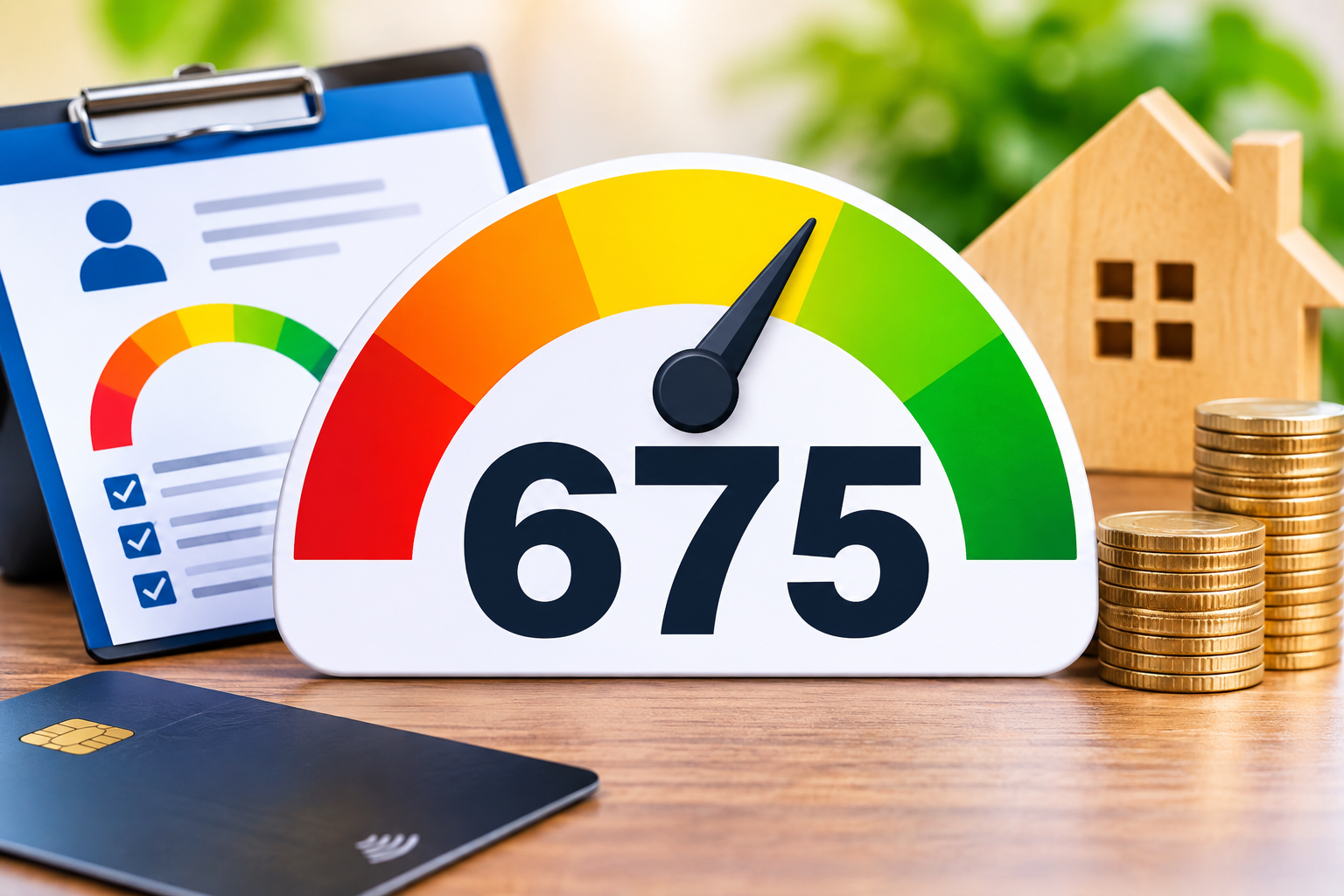
A 675 credit score is considered good under the standard FICO scoring model. It is above the fair credit range and indicates that you have made progress toward building a stronger credit history. With this score, you may qualify for a variety of credit cards, personal loans, auto loans, and mortgage products. However, you might not receive the lowest interest rates or the most competitive lending terms available.
A credit score of 675 is a useful financial milestone, especially if you have previously struggled with missed payments, high credit card balances, or limited credit history. It suggests that your credit profile has reached a level many lenders consider acceptable, although individual requirements vary.
Understanding what a 675 credit score means, how lenders evaluate it, and which steps can help you reach 700 or higher can make it easier to manage your financial future.
Is 675 a Good Credit Score?
Yes. A 675 credit score is considered good under the standard FICO scoring model, which ranges from 300 to 850. FICO classifies scores between 670 and 739 as good.
This means a borrower with a 675 score may have access to a broad selection of financial products. Many lenders consider applicants in this category acceptable borrowers, although approval and interest rates depend on additional factors.
A 675 score is also above the average U.S. FICO score of 714? No. It is below that benchmark. FICO reported an average U.S. score of 714 in July 2026, meaning a 675 score is 39 points lower than the national average.
However, being below average does not mean you have bad credit. A 675 score is already in the good FICO category and provides a foundation for further improvement.
What does a 675 score say about your credit history?
It suggests that your credit profile may have a reasonably positive payment record and manageable debt, although there could still be areas for improvement. You might have some older negative information, relatively high utilization, or a shorter credit history.
Your credit report provides the details behind the number. Reviewing it can help you understand why your score is 675 and what changes may have the greatest impact.
Understanding the Credit Score Ranges
Credit scores are generally divided into categories to help consumers and lenders understand credit risk. The following table shows the common FICO score ranges.
| FICO Score Range | Credit Rating |
| 300–579 | Poor |
| 580–669 | Fair |
| 670–739 | Good |
| 740–799 | Very Good |
| 800–850 | Exceptional |
A 675 score falls within the good category, but it is near the lower end of that range. Reaching 700 would give you a stronger position within the same category, while reaching 740 would move you into the very good category.
Does VantageScore rate 675 differently?
Yes. VantageScore 3.0 and 4.0 use different category ranges from FICO. Under these models, scores between 661 and 780 are generally classified as good.
Therefore, a 675 score is also considered good under common VantageScore classifications. However, the exact score displayed by a credit monitoring service may differ from the score used by a lender.
What Can You Get Approved for With a 675 Credit Score?
A 675 credit score may provide access to several financial products. Your approval chances depend on the lender, your income, current debt, employment history, and the specific credit product.
Credit cards
With a 675 score, you may qualify for many credit cards designed for people with good or fair-to-good credit. Some issuers may offer cash-back rewards, introductory interest rates, or other benefits.
However, premium travel cards and products with selective approval requirements may be more difficult to obtain.
Your credit history, recent applications, income, and existing credit card balances can influence the decision. Before applying, review the issuer’s eligibility criteria and compare annual fees and interest rates.
Personal loans
A 675 score can help you qualify for certain personal loans, including unsecured loan products.
Lenders may offer reasonable terms, but the interest rate could be higher than what borrowers with scores above 740 receive. Your income and debt-to-income ratio also play an important role.
Compare the annual percentage rate, repayment period, origination fees, and total borrowing cost before accepting an offer.
Auto loans
A 675 credit score may be sufficient to qualify for an auto loan from many lenders. You could have access to financing through banks, credit unions, dealerships, and specialized auto finance companies.
However, your interest rate may not be as competitive as the rate offered to someone with very good or exceptional credit.
A larger down payment, manageable existing debt, and stable income may strengthen your application.
Mortgage loans
A 675 score may provide access to several mortgage options, including certain conventional and government-backed loan programs.
Some conventional mortgage programs accept scores around 620, subject to underwriting requirements. FHA financing generally allows eligible borrowers with scores of 580 or higher to qualify for a down payment as low as 3.5%.
Your mortgage approval also depends on income, debt-to-income ratio, savings, down payment, property requirements, and lender policies.
Can You Buy a House With a 675 Credit Score?
Yes. Buying a house with a 675 credit score may be possible, depending on the mortgage program and your financial situation.
A 675 score is above several commonly used mortgage credit thresholds, which may give you access to different financing options.
Conventional mortgage loans
Some conventional mortgage programs allow borrowers with scores around 620 to apply, provided they meet the applicable underwriting requirements.
A 675 score may make you eligible for consideration, but it does not guarantee approval or the best available interest rate.
Your down payment, income, debt obligations, assets, and overall credit history also matter.
FHA mortgage loans
FHA loans are designed to make home financing more accessible to eligible borrowers. Under standard FHA guidelines, a score of 580 or higher may qualify for a down payment as low as 3.5%.
A 675 score is above this general threshold. However, lenders may apply additional requirements, and borrowers must satisfy other FHA eligibility conditions.
VA and USDA loans
If you meet the eligibility requirements, VA and USDA mortgage programs may also be worth exploring.
These programs have different rules regarding military eligibility, property location, income, and underwriting. Individual lenders may also have their own credit score requirements.
Before choosing a mortgage, compare loan estimates from multiple lenders. The interest rate, mortgage insurance, fees, and repayment terms can make a substantial difference in the overall cost.
Can You Get a Car Loan With a 675 Credit Score?
Yes. A 675 score can make auto financing accessible through several types of lenders.
However, the interest rate you receive may depend on whether you are purchasing a new or used vehicle, the loan amount, the repayment term, and your financial profile.
What interest rate can you expect?
There is no universal interest rate for a 675 credit score. Auto loan rates change with market conditions and vary between lenders.
A borrower with a 675 score may receive a higher rate than someone with a score of 750 or 800. Even a small rate difference can increase the total amount paid over the life of a loan.
How can you improve your auto loan application?
Before applying, consider these steps:
- Reduce outstanding credit card balances.
- Make all current payments on time.
- Save for a larger down payment.
- Check your credit reports for errors.
- Compare financing offers from different lenders.
- Choose a vehicle that fits your monthly budget.
If you do not need a vehicle immediately, improving your score before applying may help you qualify for more competitive financing.
What Factors Affect a 675 Credit Score?
Several factors influence your credit score. Understanding them can help you maintain your current score and identify opportunities for improvement.
Payment history
Payment history is one of the most important factors in traditional FICO scoring. It considers whether you have paid your credit cards, loans, and other reported accounts on time.
Recent missed payments can have a negative effect, especially when they become 30, 60, or 90 days overdue.
Consistent on-time payments can help build a stronger credit history.
Credit utilization
Credit utilization measures how much of your available revolving credit you are using.
For example, if your total credit card limit is $5,000 and your reported balance is $2,000, your utilization is 40%.
High utilization may negatively affect your score. Keeping balances low relative to your credit limits can support a healthier credit profile.
Length of credit history
The age of your credit accounts can influence your score. A longer history of responsible credit management may demonstrate that you can handle financial obligations over time.
Avoid closing older accounts without considering how doing so could affect your available credit and utilization.
Credit mix
Credit mix refers to the different types of credit accounts in your history. These may include credit cards, auto loans, mortgages, and personal loans.
Having experience with different types of credit may contribute to your FICO score. However, taking out a loan you do not need just to improve credit mix is generally not a good financial decision.
New credit applications
Applying for several credit cards or loans within a short period can result in multiple hard inquiries.
Hard inquiries may temporarily lower your score. Applying for credit only when necessary can help you avoid unnecessary changes to your credit profile.
How to Improve a 675 Credit Score
If your score is 675, your next goal may be reaching 700 or 740. You do not need complicated financial strategies to make progress. Consistent credit management is usually the most effective approach.
1. Review your credit reports
Start by checking your reports from Equifax, Experian, and TransUnion. In the United States, you can access free reports through AnnualCreditReport.com.
Look for incorrect balances, unfamiliar accounts, duplicate collection entries, inaccurate late payments, and outdated information.
If you find an error, dispute it with the relevant credit bureau and the company that supplied the information. Correcting inaccurate negative information may help improve your credit profile.
2. Pay every bill on time
Payment history has a major influence on traditional FICO scoring. Make sure you pay all credit card and loan bills by their due dates.
Automatic payments and calendar reminders can help prevent accidental late payments.
If you are having difficulty paying a bill, contact the creditor before the account becomes seriously overdue.
3. Reduce credit card balances
High credit utilization can hold back your score. Focus on reducing balances on cards that are close to their limits.
A commonly recommended target is to keep utilization below 30%, although lower utilization may be better for scoring.
For example, if your credit limit is $4,000, keeping your reported balance below $1,200 would place utilization under 30%.
4. Avoid unnecessary credit applications
Do not apply for several new credit cards simply to increase your available credit.
Each application may result in a hard inquiry, and opening multiple accounts quickly can make your credit profile more complicated.
Research eligibility requirements before applying. When available, soft-inquiry prequalification tools can help you compare potential offers.
5. Keep older accounts open when appropriate
Older accounts can contribute to the length of your credit history. Closing an account may also reduce your total available revolving credit.
If an older card has no annual fee and you can manage it responsibly, keeping it open may be beneficial.
6. Consider a secured credit card if needed
If you have difficulty qualifying for an unsecured credit card, a secured card may help you continue building positive payment history.
You provide a refundable deposit, which generally determines your credit limit. Choose an issuer that reports payment activity to the major credit bureaus.
Use the card for manageable purchases and pay your statement on time. You do not need to carry a balance or pay interest to build credit.
7. Manage collection accounts carefully
If your credit report contains collection accounts, verify that the information is accurate before making payment arrangements.
Dispute accounts that do not belong to you or contain incorrect information. For legitimate debts, contact the collection agency to discuss repayment options and request written confirmation of any agreement.
Paying a collection account does not guarantee a specific score increase. Its effect depends on the scoring model and the details of your credit report.
How Long Does It Take to Improve a 675 Credit Score?
The time needed to improve a 675 credit score depends on your credit history and the factors affecting your current score.
If your score is mainly affected by high credit card balances, paying them down may produce changes after creditors report updated information. If you have recent missed payments, defaults, or collections, improvement may take longer.
The following milestones can help you plan your progress.
| Credit Score Goal | FICO Credit Category |
| 675–699 | Good |
| 700–739 | Good |
| 740–799 | Very Good |
| 800–850 | Exceptional |
Your first target can be 700, followed by 740. These are useful milestones, but you should focus on improving your overall credit profile rather than chasing a specific number.
Creditors generally report account information periodically, often monthly. Your score may change when new information appears in your credit report.
675 Credit Score vs. 700, 720, and 740
Comparing your score with higher ranges can help you understand what you may gain by continuing to improve your credit.
675 credit score: This is in the good FICO category. You may qualify for several credit products, although some lenders may offer higher rates than they would to applicants with stronger scores.
700 credit score: This is also good credit. It may improve your position when comparing credit cards, auto financing, and personal loans.
720 credit score: This is a stronger score within the good FICO category. It may help you qualify for more competitive offers, depending on the lender.
740 credit score: This marks the beginning of the very good FICO category. Borrowers in this range may have access to more favorable interest rates and loan terms.
Moving from 675 to 740 can strengthen your credit profile, but your income, debt, and payment history remain important.
Is a 675 Credit Score Good for Renting an Apartment?
A 675 credit score may be acceptable to many landlords and property management companies, but rental approval policies vary.
Some landlords use credit scores as part of their screening process. Others focus more on income, rental history, employment, references, and previous evictions.
If your score is 675, prepare documents that demonstrate your ability to pay rent consistently. These may include recent pay stubs, employment verification, bank statements, and references from previous landlords.
Some landlords may also consider a co-signer or additional security arrangements where permitted by local law.
A good rental history and stable income can strengthen your application even when your credit score is not exceptional.
Common Mistakes to Avoid With a 675 Credit Score
Maintaining a good score requires careful financial decisions. Avoiding the following mistakes can help protect your progress.
Missing payment deadlines: Even one reported late payment can damage an otherwise positive credit history.
Using too much available credit: High credit card balances can increase utilization and negatively affect your score.
Applying for multiple accounts: Several applications within a short period can create unnecessary hard inquiries.
Closing older credit cards without planning: Doing so may reduce your available credit and affect utilization.
Ignoring credit report errors: Incorrect information can remain on your report if you do not review it regularly.
Taking on unnecessary debt: You do not need additional loans or credit cards simply to improve your credit mix.
Conclusion
A 675 credit score is considered good under the standard FICO scoring model. It can provide access to a wide range of credit cards, personal loans, auto financing, and mortgage opportunities. However, you may not receive the lowest interest rates or the most competitive terms available. If your score is currently 675, focus on maintaining on-time payments, reducing credit card balances, checking your credit reports, and avoiding unnecessary applications. Reaching 700 and eventually 740 can strengthen your borrowing position. With consistent financial habits and responsible credit management, you can continue building a healthier credit profile.
Frequently Asked Questions
1. Is 675 a good credit score?
Yes. A 675 credit score is considered good under the standard FICO scoring model. It falls within the 670–739 range. Under VantageScore 3.0 and 4.0, it is also classified as good.
2. Can I buy a house with a 675 credit score?
Yes. A 675 score may qualify you for certain conventional and FHA mortgage programs, depending on the lender and other eligibility requirements. Your income, debt-to-income ratio, down payment, and financial history also influence approval.
3. Can I get a car loan with a 675 credit score?
Yes. Many auto lenders consider applicants with a 675 score. However, your interest rate and loan terms depend on your income, down payment, vehicle price, existing debt, and lender requirements.
4. How long does it take to raise a 675 credit score to 700?
There is no fixed timeline. Some people may see progress within a few months after reducing high credit card balances or correcting reporting errors. Others may need longer if their reports contain recent negative information.
5. What is the fastest way to improve a 675 credit score?
Start by checking your credit reports for errors, paying all bills on time, and reducing high credit card balances. Avoid unnecessary hard inquiries and manage existing accounts responsibly. These steps can help strengthen your credit profile over time.


1 Comment
[…] Read More: 675 Credit Score: Is It Good and What Can You Do With It? […]