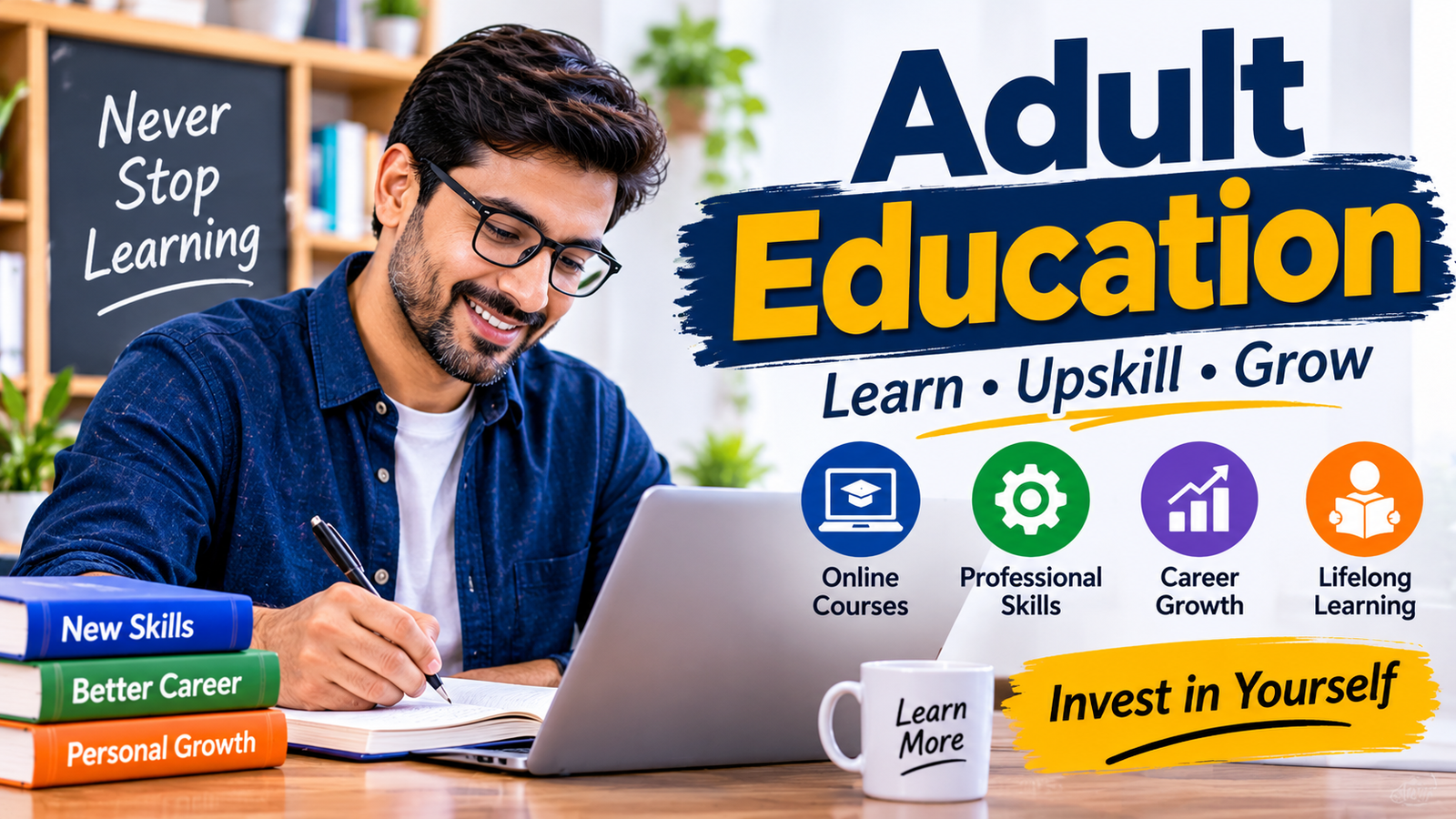
Education is not limited to childhood or the teenage years. People can continue learning new things at any stage of life, whether they want to improve their professional skills, complete an unfinished qualification, change careers, or develop personal interests. In a rapidly changing world, learning throughout life has become increasingly important for personal growth and professional success.
Adult education provides opportunities for individuals who want to continue their studies after entering the workforce or taking on family responsibilities. It includes formal courses, professional training, vocational programs, online classes, literacy programs, and other learning activities designed to meet the needs of adult learners.
Many adults return to education because they want better employment opportunities, higher salaries, improved confidence, or the ability to adapt to new technologies. Others study because they enjoy gaining knowledge and want to achieve goals they could not pursue earlier in life.
With flexible learning options and digital educational resources, continuing education has become more accessible than ever. Understanding its importance, benefits, and available opportunities can help adults make informed decisions about their learning journey.
What Is Adult Education?
Adult education refers to educational activities designed for people who have reached adulthood and want to develop their knowledge, skills, qualifications, or personal abilities. Unlike traditional education, which generally follows a fixed school or college structure, adult learning often provides more flexible options.
Adults may participate in education for different reasons. Some want to improve their basic reading, writing, and mathematics skills, while others want to gain professional certifications or complete higher education.
Adult learning can take place in classrooms, colleges, training centres, workplaces, community organisations, and online platforms. The learning method depends on the subject, the learner’s goals, and the time available.
Formal Education
Formal education includes structured academic programs offered by recognised schools, colleges, universities, and educational institutions. Adults may enrol in diploma programs, undergraduate degrees, postgraduate courses, or other recognised qualifications.
These programs usually follow a defined curriculum and may include examinations, assignments, and certificates.
Non-Formal Education
Non-formal education includes organised learning activities that may not follow a traditional academic structure. Examples include short courses, workshops, community training sessions, and professional development programs.
These options can help adults gain practical knowledge without committing to a long academic program.
Informal Learning
Informal learning happens through everyday experiences, personal interests, reading, online tutorials, workplace activities, and conversations with others.
For example, an adult who learns photography through online videos or improves communication skills through regular practice is participating in informal learning.
Why Is Adult Education Important?
Education plays an important role in personal development and social progress. For adults, learning can provide opportunities to improve their employment prospects, adapt to changing industries, and participate more confidently in society.
Improving Employment Opportunities
Many industries require employees to update their skills regularly. New software, digital tools, workplace practices, and industry standards can change the knowledge employers expect from workers.
Adults who continue learning may become better prepared for new responsibilities and job opportunities. Professional courses and recognised qualifications can also help individuals strengthen their resumes.
Supporting Career Changes
Some adults discover that their current profession no longer matches their interests or long-term goals. Others may need to change careers because of economic conditions or changes in the job market.
Education can help them prepare for a different field. For example, someone working in retail may study digital marketing, accounting, computer applications, or business management to explore new career opportunities.
Building Confidence and Independence
Learning new skills can improve self-confidence. Adults who develop their reading, communication, technology, or professional abilities may feel more comfortable handling everyday responsibilities.
Education can also help people make informed decisions about finances, employment, health information, and other important areas of life.
Encouraging Social Participation
Learning environments bring people together from different backgrounds and experiences. Adult learners can share ideas, develop communication skills, and build supportive relationships.
Community education programs can also encourage participation in local activities and help people become more involved in society.
Major Benefits of Adult Education
Continuing education offers benefits that go beyond earning certificates or completing academic qualifications. It can support professional development, personal growth, and lifelong independence.
1. Better Career Development
One of the main reasons adults return to education is career improvement. Additional qualifications and practical skills may help individuals apply for better positions, take on leadership responsibilities, or move into specialised roles.
For example, an employee interested in management may complete a leadership course to understand team coordination, planning, and decision-making.
2. Higher Earning Potential
Education can improve access to career opportunities that offer better financial prospects. However, higher earnings are not guaranteed because outcomes depend on the qualification, industry, experience, location, and demand for particular skills.
Choosing relevant courses and understanding employer requirements can help adults make more practical education decisions.
3. Improved Digital Literacy
Digital knowledge is increasingly important in modern workplaces and everyday life. Adults may need to use computers, smartphones, online banking services, workplace software, and digital communication platforms.
Learning these skills can make everyday activities easier and help individuals participate more confidently in a technology-driven society.
4. Personal Satisfaction
Many people return to education simply because they want to learn something new. Studying a subject of personal interest can provide satisfaction and a sense of achievement.
Whether someone wants to learn a language, understand history, improve writing, or study science, education can support intellectual curiosity.
5. Better Problem-Solving Skills
Learning encourages people to analyse information, compare different viewpoints, and make thoughtful decisions. These abilities can be useful in professional situations as well as personal life.
Adults can apply what they learn to workplace challenges, financial planning, family responsibilities, and everyday problems.
6. Greater Adaptability
Industries and technologies continue to change. Adults who develop a habit of learning may find it easier to adjust to new responsibilities, tools, and working environments.
Adaptability is especially valuable for people working in industries affected by digital transformation and automation.
Different Types of Adult Education Programs
Adult learners have access to many educational options. Choosing the right program depends on their current qualifications, career plans, available time, and preferred learning method.
Basic Literacy and Numeracy Programs
These programs help adults improve reading, writing, communication, and mathematical skills. They are particularly useful for people who did not receive sufficient educational opportunities earlier in life.
Basic literacy can improve independence and help individuals access further education and employment opportunities.
High School Equivalency Programs
Some adults want to complete an educational qualification they could not finish during their school years. High school equivalency programs provide alternative pathways, depending on the education system and recognised qualifications available in their region.
Completing an equivalent qualification may help learners apply for further studies or jobs that require a specific educational level.
Vocational and Technical Training
Vocational education focuses on practical skills needed for specific occupations. Programs may cover areas such as electrical work, plumbing, healthcare support, hospitality, automotive services, computer applications, and other technical fields.
These courses are often designed to help learners develop job-related abilities through practical training.
Professional Development Courses
Professional development programs help employees improve skills related to their current careers. Topics may include project management, leadership, communication, customer service, accounting, data analysis, and workplace technology.
Such courses can support career growth and help professionals remain updated in their industries.
Higher Education for Adults
Adults can also enrol in college or university programs to earn undergraduate or postgraduate qualifications. Many institutions offer part-time, evening, distance-learning, and online options.
These arrangements can make higher education more manageable for people who are already working or managing family responsibilities.
Online Learning Opportunities for Adults
Online education has created new opportunities for people who cannot regularly attend traditional classrooms. Adults can access courses from home, work, libraries, or other locations with suitable internet access.
Flexible Study Schedules
Online courses often allow students to access recorded lessons and learning materials at convenient times. This can be useful for working professionals, parents, and people with other responsibilities.
Some courses also include live classes, scheduled discussions, and deadlines that require regular participation.
Access to Different Subjects
Online learning platforms provide courses in subjects such as business, technology, languages, writing, marketing, design, and personal development.
Adults can compare different programs and select those that match their goals.
Affordable Learning Options
Some online courses are available free of charge, while others require payment for lessons, assessments, or certificates. Online learning may reduce certain expenses associated with travelling and attending physical classes.
However, learners should compare course costs, quality, recognition, and practical value before enrolling.
Learning at an Individual Pace
Recorded lessons and digital resources allow learners to review difficult topics and repeat lessons when needed. This can be helpful for adults who need additional time to understand unfamiliar concepts.
Online learning requires self-discipline, though. Creating a study routine and setting realistic goals can improve consistency.
Challenges Faced by Adult Learners
Although adult education provides many opportunities, returning to study can be difficult. Adults often need to balance learning with work, family, financial responsibilities, and personal commitments.
Time Management
One of the biggest challenges is finding enough time to study. Working adults may have limited free time because of job responsibilities and family activities.
Creating a weekly timetable can help learners organise study sessions around their existing commitments.
Financial Limitations
Course fees, learning materials, examination charges, transportation, and technology expenses can create financial pressure.
Adults should research affordable programs, scholarships, employer-sponsored training, and financial assistance where available.
Lack of Confidence
Some adults may feel nervous about returning to education after many years away from formal learning. They may worry about examinations, technology, or keeping up with younger students.
Starting with a short course or introductory program can help build confidence gradually.
Family and Work Responsibilities
Family care and professional duties may make it difficult to maintain a regular study schedule. Support from family members and flexible educational programs can make learning more manageable.
Technology Barriers
Online education often requires access to a suitable device, internet connection, and basic digital skills. Adults who are unfamiliar with technology may need introductory computer training before beginning advanced online courses.
How to Choose the Right Adult Education Program
Selecting the right program is an important step toward achieving educational goals. Adults should evaluate their requirements before spending time and money on a course.
- Define your goal: Decide whether you want a new qualification, career advancement, practical skills, or personal development.
- Check course recognition: Research whether the institution and qualification are recognised by relevant authorities or employers.
- Compare learning formats: Consider classroom-based, online, part-time, evening, and hybrid programs.
- Review the curriculum: Make sure the subjects and practical activities match your learning objectives.
- Understand the total cost: Check tuition fees, examination charges, learning materials, and any additional expenses.
- Check the schedule: Choose a program that fits your work and family responsibilities.
- Read student feedback: Reviews and experiences from previous learners may help you understand the quality of the course.
- Consider future opportunities: Research whether the program can support further education or employment in your chosen field.
Taking time to compare options can help adults avoid unsuitable courses and make better educational decisions.
The Role of Employers in Adult Education
Employers can play an important role in encouraging continuous learning. Businesses benefit when employees update their knowledge, improve their skills, and understand new technologies.
Workplace Training
Companies can organise training sessions to teach employees about new software, safety procedures, communication methods, and industry developments.
Financial Support for Courses
Some employers provide financial assistance for job-related courses, professional certifications, or higher education programs. Such support can make learning more affordable for employees.
Mentoring and Skill Development
Experienced employees can guide others through mentoring programs. This allows workers to learn practical knowledge, understand workplace expectations, and develop professional confidence.
Creating a Learning Culture
Organisations that encourage employees to share knowledge and participate in training can create a more supportive workplace. Regular learning opportunities can also help businesses respond to changing industry requirements.
Adult Education and Lifelong Learning
Lifelong learning means continuing to develop knowledge and skills throughout life. It does not require someone to remain enrolled in a formal educational institution.
Adults can learn through professional training, online courses, reading, workshops, community activities, and practical experiences.
The idea of lifelong learning is important because knowledge and technology continue to change. Skills that were useful several years ago may need updating to remain relevant.
For example, professionals may need to learn new digital tools, business owners may study online marketing, and employees may develop communication or leadership abilities.
Lifelong learning also supports personal interests. Adults can explore creative activities, learn new languages, understand financial management, or develop practical hobbies.
The main objective is to maintain curiosity and remain willing to learn at every stage of life.
The Future of Adult Education
The future of adult learning is likely to involve more flexible programs, digital platforms, and technology-supported teaching methods. Educational institutions and training providers are exploring different ways to make learning accessible to people with diverse needs.
Artificial Intelligence in Education
Artificial intelligence tools can help learners practise subjects, receive explanations, and organise study activities. Some educational platforms use adaptive systems to recommend lessons based on a student’s progress.
However, learners should verify information and develop their own understanding rather than relying entirely on automated answers.
Microlearning
Microlearning involves studying information through short lessons focused on specific topics or skills. This method may be useful for busy adults who cannot dedicate long periods to studying every day.
Short lessons can cover subjects such as workplace communication, software skills, financial knowledge, or language practice.
Hybrid Learning
Hybrid learning combines online education with classroom-based instruction. Students may attend some lessons in person and complete other activities through digital platforms.
This approach can provide flexibility while maintaining opportunities for direct interaction with teachers and classmates.
Virtual Learning Environments
Virtual learning environments allow students to attend classes, access resources, participate in discussions, and submit assignments through digital platforms.
As technology develops, these environments may provide more interactive and collaborative educational experiences.
Conclusion
Adult education provides valuable opportunities for people who want to improve their knowledge, develop professional skills, complete qualifications, or explore personal interests. Learning is not limited to a particular age, and adults can benefit from education at different stages of life.
Modern technology has made learning more flexible through online courses, digital libraries, educational applications, and interactive teaching tools. At the same time, traditional classrooms, vocational training, and workplace programs continue to play an important role.
Although adults may face challenges related to time, finances, family responsibilities, and confidence, careful planning can make continuing education more achievable. Choosing a recognised and relevant program is also important for getting meaningful results.
Ultimately, education is a lifelong process. Adults who remain open to learning can develop new abilities, adapt to changing opportunities, and improve both their professional and personal lives.
Frequently Asked Questions
1. What is adult education?
Adult education refers to learning activities designed for adults who want to improve their knowledge, qualifications, professional skills, or personal abilities. It includes formal education, vocational training, online courses, and informal learning.
2. Why is adult education important?
Adult education helps people improve career opportunities, develop new skills, gain confidence, and adapt to changes in technology and the workplace. It also supports personal development and lifelong learning.
3. Can adults study online while working full-time?
Yes. Many online programs offer recorded lessons, flexible schedules, and part-time study options. Working adults can organise their learning around professional and family responsibilities.
4. What are the best courses for adult learners?
Suitable courses depend on individual goals. Popular options include computer skills, digital marketing, business management, accounting, communication, vocational training, and professional certifications.
5. Is it too late to return to education as an adult?
No. Adults can return to education at different stages of life. With suitable learning options, realistic goals, and consistent effort, they can develop new skills and work toward additional qualifications.